Understanding Domain Appraisal: What You Need to Know for Accurate Valuations
Complete guide to domain appraisal covering valuation methods, key factors, professional tools, and practical strategies for accurate domain pricing.
Editor
Domain Investment Expert
Understanding Domain Appraisal: What You Need to Know for Accurate Valuations
Buying or selling a domain name without knowing its real worth? That's a bit like shopping blindfolded. Domain appraisal is the process of determining a domain name's market value based on factors like length, keywords, traffic, and comparable sales data.
Whether you own a single domain or manage a whole portfolio, understanding how valuation works helps you dodge costly mistakes.
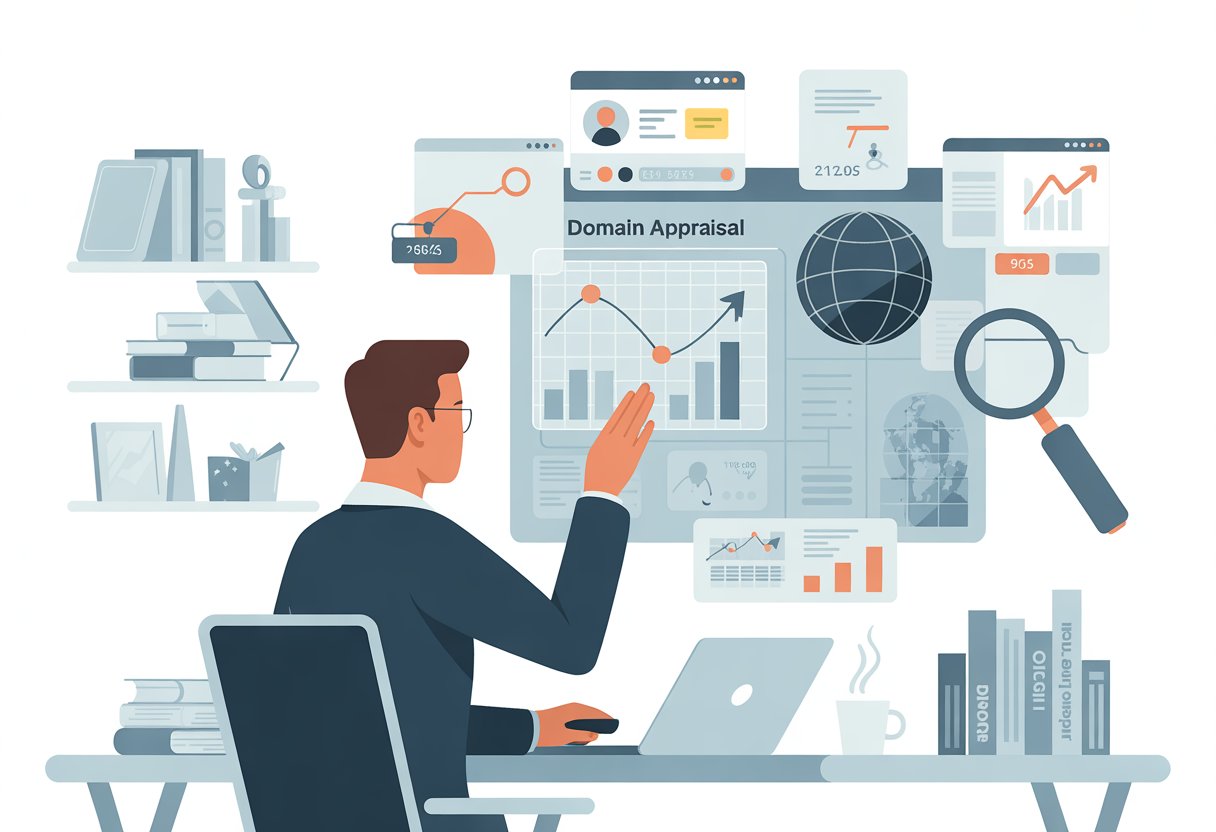
The domain market's a wild place. Some names sell for millions, while others just sit there gathering dust.
Your domain's extension, age, and brandability matter a lot when it comes to value. Modern appraisal tools use machine learning algorithms to process millions of domain transactions and provide real-time valuations.
Key Takeaways
- Domain appraisal determines market value using factors like length, keywords, traffic, and sales history.
- Multiple valuation methods exist including automated tools, professional services, and self-evaluation techniques.
- Accurate appraisals help you make informed buying and selling decisions while avoiding costly mistakes.
What Is Domain Appraisal?
Domain appraisal means figuring out how much a domain name's worth in the current market. This evaluation checks things like the domain's length, keywords, and past sales data to estimate its value.
Definition and Core Concepts
Domain name appraisal is the process of evaluating the worth of a domain name based on various criteria. Think of it like getting your house appraised before you sell.
The appraisal considers some key factors. Domain length matters—shorter names usually fetch higher prices.
Keyword relevance checks if the domain contains popular search terms. Brandability is about how easy the domain is to remember and spell.
A domain like "cars.com" nails brandability, right? Market trends reveal what types of domains are hot right now.
Domain age and backlinks also play a part. Older domains with lots of quality links tend to cost more.
Key Factors Influencing Domain Value

Several specific elements shape a domain's value in today's market. Domain extension type, keyword strength, age history, and current market demand all play big roles in setting the final price.
Domain Name Relevance and Length
Short domains—think 3 to 6 characters—usually sell for more than longer ones. Single-word domains? They're the holy grail: easy to remember, easy to type.
The relevance of your domain to popular industries matters a lot. Domains tied to tech, finance, or health often get higher appraisals than niche ones.
Most Valuable Domain Characteristics:
- 6 characters or fewer
- Common English words
- Related to high-demand industries
- Easy to spell and pronounce
Skip domains with hyphens, numbers, or weird spellings. Those just make things harder for branding and memorability.
Your domain should make sense to buyers in your target market. Generic terms like "cars" or "loans" usually beat out clever but confusing names.
Types of Domain Appraisal Methods
Domain appraisal has three main approaches for figuring out value. Modern appraisal tools use machine learning algorithms for speed, while manual expert reviews dig deeper into specific market factors.
Automated Appraisal Tools
Automated tools give you a quick domain valuation using algorithms. They check millions of past sales in seconds, looking at things like length, keywords, and traffic.
Popular automated tools:
- GoDaddy Domain Appraisal
- Estibot
- NameBio
- DomainIndex
These tools compare your domain to similar ones that sold recently. They use formulas to guess your domain's worth.
Most automated appraisals are free or cheap—usually under $10.
Benefits:
- Super fast results
- Low cost or free
- Good for rough estimates
- Easy to use
Drawbacks:
- Not as accurate as expert reviews
- Miss unique trends
- Struggle with brandability
- Don't factor in current events
Use automated tools when you just want a ballpark figure. They work best for common domains with lots of sales data.
Popular Domain Appraisal Tools and Services
Several established platforms offer reliable domain appraisal services, each with their own features and pricing. GoDaddy's machine learning algorithms process millions of historical sales, while EstiBot provides daily valuation updates for active portfolio management.
EstiBot and Its Features
EstiBot's one of the most comprehensive domain appraisal platforms out there. The service processes over 2 million valuations daily, so it's a solid choice for both casual users and serious investors.
Key Features:
- Daily valuation updates that reflect current market conditions
- Portfolio monitoring tools for managing lots of domains
- API integration for custom setups
- Historical trend analysis to track value changes over time
You get both free basic appraisals and premium features. Instant valuations cost nothing, but advanced portfolio management needs a subscription.
EstiBot's strength really lies in its real-time market data. The system catches market moves quickly and adjusts valuations based on recent sales and industry news.
If you're managing a big portfolio, EstiBot's automated monitoring can save you a ton of time. You'll get alerts when domain values shift a lot or when the market takes a turn.
Interpreting Domain Appraisal Reports
Domain appraisal reports lay out the specific data and metrics that shape your domain's estimated value. These reports tend to have standard sections, but you've got to know their limits before making any big decisions.
Understanding Appraisal Metrics
Appraisals rely on a handful of key metrics. Age stands out—older domains almost always get a higher value.
Length matters a lot, too. Shorter domains, especially two- or three-letter ones, can fetch jaw-dropping prices.
Brandability is all about how catchy and marketable the name sounds. Brandable domains often outshine exact-match keyword domains when it comes to price.
Traffic data gives an idea of how many people visit the domain monthly. More traffic usually means a higher valuation. Some tools just estimate if they can't get the real numbers.
Backlink profiles count the quality and number of sites linking in. Strong backlinks can really bump up the value.
Extension type plays a big role. .com is king, while country-specific extensions depend on local demand.
Practical Uses for Domain Appraisals
Domain appraisals help you make smarter financial moves when buying or selling. They're also handy for brand protection and managing a bunch of domains at once.
Buying or Selling a Domain
Getting a domain appraised before buying keeps you from overpaying. Professional appraisals use data like comparable sales and search volume to give you a fair price.
As a seller, an appraisal gives you a solid starting point for negotiations. It reassures buyers that your price isn't just pulled out of thin air.
Key benefits for transactions:
- Avoid overpaying for domains
- Set realistic selling prices
- Speed up negotiations with data
- Reduce disputes over value
Smart buyers always check recent sales of similar domains—look at length, keywords, and extension. These really shape the final value.
Sellers can use appraisals to time their sales. If your domain's worth more than you paid, maybe it's time to cash in.
How to Maximize Domain Value
You can boost your domain's value by improving SEO, building authority, and negotiating smartly. These strategies can make buyers pay a lot more than you'd expect.
Improving SEO and Online Presence
SEO directly affects your domain's market value. Domains with strong SEO metrics usually attract higher offers.
Keyword optimization is the bedrock. Aim for names with relevant keywords businesses want to rank for. Short, memorable domains with popular keywords tend to fetch top dollar.
Build quality backlinks by:
- Guest posting on reputable sites
- Creating content people want to link to
- Partnering with industry publications
- Submitting to the right directories
Technical SEO factors matter, too. Make sure your domain has:
- Fast loading speeds
- Mobile-friendly design
- Clean URLs
- SSL certificates
Track progress with tools like Google Analytics and Search Console. Keep records of traffic, rankings, and click-through rates to impress buyers.
Frequently Asked Questions
Domain appraisal means analyzing factors like age, length, keywords, and market demand to figure out value. You can use automated tools or hire a pro, but historical performance and future potential both play big roles.
How is the value of a domain name determined during an appraisal?
Appraisers use three main methods to set value. Automated tools look at data like age, length, and keywords.
Comparative appraisal checks out similar domains that already sold. This sets a price range based on real deals.
Professional appraisers dig into extensions, search rankings, and sales history. They add their expertise and market insights to the mix.
What are the key factors that influence a domain's appraisal value?
Age is huge. Older domains usually fetch more because they've built up history.
Length really matters. Shorter names are more desirable and get higher prices.
Keyword relevance can give a big boost. Domains with hot search terms or industry phrases often appraise higher.
Brandability is about memorability and market appeal. Catchy names get better valuations.
Extensions make a difference. .com is the gold standard, with .net and .org trailing behind.
Can the historical performance of a domain impact its appraisal?
Absolutely, historical performance plays a big part. Old search rankings can add value.
Past traffic numbers matter. Domains that pulled in lots of visitors usually get higher valuations.
A strong backlink profile from years of use helps, too. Quality links can raise your domain's value.
If the domain made money before, that's a plus. Revenue history often leads to a higher appraisal.
What is the difference between automated and manual domain appraisals?
Automated appraisals use software to quickly analyze tons of data points—age, length, keywords, and more.
Manual appraisals involve human experts who look at trends, industry knowledge, and the stuff machines miss.
Automated tools are faster and cheaper but might miss subtle factors.
Manual appraisals take more time and cost more, but they're usually more accurate for tricky or unique domains.
How do domain appraisals account for the potential future value of a domain?
Appraisers look at emerging trends to guess future value. They research growing industries that could drive up demand for certain keywords.
Tech developments can change domain values, so appraisers try to predict which domains might become more valuable.
Trademark and legal risks can lower future value. If a domain might run into legal trouble, appraisers often score it lower.
Development potential matters, too. Domains fit for big projects or businesses usually get higher future value ratings.
What are the common misconceptions about domain appraisal processes?
A lot of folks think domain age alone drives value. Sure, age helps, but relevance and brandability? Those can matter just as much, sometimes more.
There's this idea floating around that longer domains are always worth less. But that's not really true—sometimes a longer, descriptive name beats out a short, meaningless one.
People also tend to trust automated appraisals way too much. These tools spit out numbers, but honestly, they can't match a professional's eye, especially for unique names.
Another one: some assume the price they paid is what the domain's worth now. Not quite. The market shifts, trends come and go—values can swing a lot.
And then there's the myth that all .coms are goldmines. Extensions do play a role, but let's be honest—content, keywords, and what people actually want matter a whole lot more.