How Domain Length Affects Its Market Value: A Complete Guide
Discover how domain length directly impacts market value, with shorter domains commanding higher prices and better sell-through rates.
Editor
Domain Investment Expert
How Domain Length Affects Its Market Value: A Complete Guide
The length of your domain name matters a lot when it comes to how much it's actually worth these days.
While plenty of factors play into domain value, the number of characters can really tip the scales.

Domains with 5-9 characters—especially those in the 6-8 range—keep showing up at the top for sell-through rates and premium pricing.
Recent data backs this up: shorter domains have significantly higher sell-through rates. For example, 3-letter domains sell at 5.1%, but 12-letter ones only manage 2.3%.
Domain length affects everything from memorability to how much someone's willing to pay. If you're buying your first domain or building a portfolio, getting a handle on these dynamics can save you a lot of headaches.
Key Takeaways
- Shorter domains (5-9 characters) move faster and pull in better offers.
- Domain length shapes how memorable and easy-to-type a name is, so shorter ones have the edge for branding.
- Domains over 12 characters just don't get the same love from buyers or investors.
The Relationship Between Domain Length and Market Value
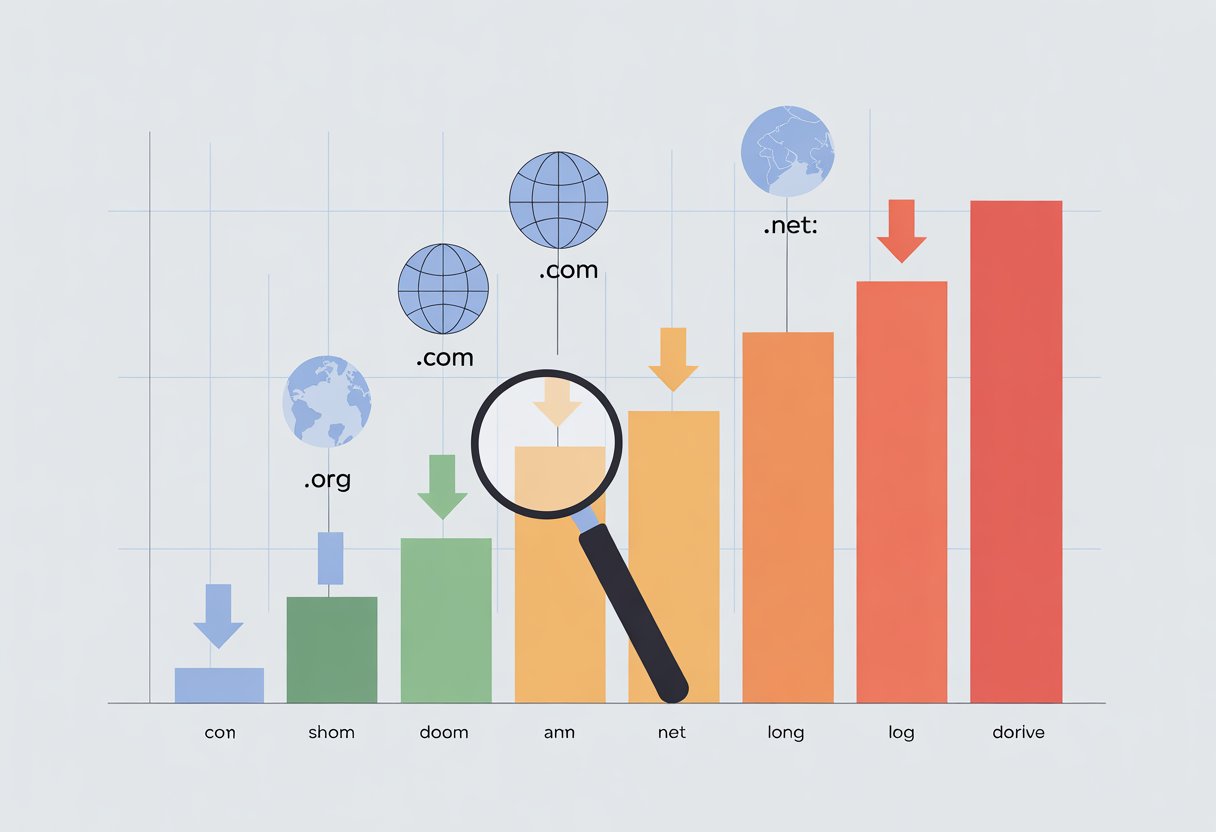
Domain length connects directly to market value. Shorter names usually get higher prices because buyers want them, and there just aren't many left.
The number of characters in your domain affects both price and how quickly you'll find a buyer.
Market Perception of Short Versus Long Domains
Short domains have a premium feel in the market. Buyers see them as more professional and trustworthy.
A name like "car.com" just looks more legit than "amazingcardealstoday.com." That first impression can mean a lot for price.
Key perception factors:
- Professionalism: Short domains look more established.
- Authority: Both users and search engines trust them more.
- Brand strength: Concise names stick in people's minds.
Long domains face an uphill battle with perception. They can come across as amateurish or even spammy.
Sometimes, though, a longer domain with strong keywords still pulls weight. For instance, "bestinsurance.com" could beat out "xyz.com" in the insurance world.
Brandability, Memorability, and Domain Length
Short domain names just stick better. They're easier to remember and help you look more legit online.
They also make it way easier for people to find your site.
Influence on Brand Recognition
Short domains become branding powerhouses because you can slap them on anything—business cards, ads, social media—without it getting awkward.
A domain like "Nike.com" looks sharp everywhere. Try fitting "NikeAthleticShoesAndApparel.com" on a business card and see how that goes.
Your brandability gets a real boost when people instantly connect your domain to your business. Domain length seriously impacts brandability.
Companies with short domains usually see better brand recall. Our brains just latch onto shorter words more easily.
Brand benefits of short domains:
- Fits on more stuff.
- Cleaner logos.
- Works in radio ads.
- Easier to trademark.
When your domain doesn't crowd out your other branding, everything feels more put-together.
Keyword Relevance and SEO Impact
Keywords in your domain help connect your site to what people are searching for. Domain length affects SEO, but keyword relevance is what really helps search engines "get" your site.
Keyword-Rich Domains and Value
Domains with good keywords boost your SEO and visibility. If your name matches what people are searching for, you've got an edge.
Exact match domains still help with rankings. "BestPizzaDelivery.com" pretty much tells everyone (and Google) what you do.
Benefits of keyword-rich domains:
- Higher click-through rates.
- Better brand recognition.
- Easier for search engines to figure you out.
Don't go overboard, though. Keyword stuffing in domains can backfire.
The Role of Domain Extension and TLD
Your domain extension (like .com, .io, etc.) can totally change your domain's value and how much people trust your site.
.com domains are still king—most folks recognize and trust them. Other extensions can work, but it depends on your niche.
Importance of .com Domains
.com domains always carry the most weight—doesn't matter how long or short. .com domains usually fetch higher prices because people trust them.
Most users just expect sites to end in .com. That's a big credibility boost.
Here's how pricing stacks up:
| Domain Length | .com Premium | Other TLD Average |
|---|---|---|
| 4-6 characters | $10,000-$50,000+ | $1,000-$5,000 |
| 7-10 characters | $1,000-$10,000 | $100-$1,000 |
| 11+ characters | $100-$1,000 | $10-$100 |
Short .com domains hit premium prices that other extensions just can't touch.
Domain Age, History, and Authority
Older domains usually cost more because search engines trust them more. A solid backlink profile and a clean history can boost your domain's value in a big way.
Influence of Domain Age on Value
Domain age significantly impacts market value because trust and credibility build up over time. Search engines tend to favor domains with longer registration histories since that shows stability and legitimacy.
Aged domains usually have established backlink networks and higher authority scores. These perks boost search engine rankings, which means more traffic and, potentially, more revenue.
The monetary value goes up with age but also depends on keywords and market demand. Domains registered for 5-10 years often sell for 20-40% more than new ones with similar features.
Domain registration stability matters, too. Buyers trust domains with steady renewal patterns and no weird gaps in their history.
Market Trends and Recent Sales Data
Domain length plays a big role in sale success and value. Recent data from domain marketplaces reveals clear buyer preferences and pricing trends.
Analyzing Recent Domain Sales
If you look at recent sales, patterns jump out based on domain length. Atom.com's June 2025 data shows 3-letter domains get a 5.1% sell-through rate.
Seven-letter domains aren't far behind at 4.8%. Once you hit 12 letters, that rate drops to just 2.3%.
Premium Approval Rates by Length:
- 5-7 characters: 75%
- 8-11 characters: 65%
- 12 characters: 41%
- 13-16 characters: 30%
Domain Agents' offer data shows most buyer interest goes to domains with 5-9 characters. Six-character domains seem to hit peak demand, making up about 11-12% of all offers.
Domains shorter than 5 or longer than 9 characters see fewer offers. There's a definite sweet spot for investors here.
Valuation Methods and Tools for Different Lengths
Different domain lengths need their own valuation approaches. Algorithmic tools analyze popularity, length, keywords, and trends to give you a tailored estimate for each domain.
Automated Domain Valuation Tools
Valuation tools look at metrics like domain length, keyword relevance, traffic potential, and sales data to estimate market worth. They tweak their algorithms depending on character count and complexity.
Estibot spits out instant valuations and factors length right into its pricing. Shorter domains usually get higher base scores before other things come into play.
GoDaddy's Domain Appraisal also weighs length heavily. Domains under six characters get premium values, while longer names get discounted.
Popular automated tools:
- Estibot: Uses machine learning for length patterns
- GoDaddy Appraisal: Mixes marketplace data with length metrics
- NameBio: Tracks historical sales by character count
- Flippa's tool: Gives real-time estimates by length category
These tools work best for standard domains. If you've got a quirky or ultra-brandable long name, they might not nail the value.
Frequently Asked Questions
Domain length shapes market value through memorability, typing ease, and branding. Extension type, industry focus, and character count all play into what buyers will pay.
What factors determine the market value of a short domain name?
Short domains stand out for being easy to remember and fast to type. You can punch them in quickly without typos, which is great for direct traffic.
Brandability is huge. Short names look sharp in logos, ads, and marketing across platforms.
Scarcity drives up demand for premium short domains. Most of the good ones are taken, so limited supply boosts value.
Search engines tend to trust short domains more. That can help your site's ranking and organic traffic.
Does the extension of a domain (.com, .org, .net) impact its length-related market value?
The .com extension really amplifies the value of short domains. A short .com usually sells for way more than a .org or .net of the same length.
.Com domains get more direct type-in traffic. People just expect websites to end in .com, so businesses fight for those.
Other extensions like .org and .net follow similar patterns, but their prices stay lower than .coms. Country-specific extensions can be valuable if they're short, though—a two-letter .co or three-letter .io can go for a lot in the right market.
How do longer domain names compare to shorter ones in terms of resale value?
Longer domains almost always sell for less than short ones. Short domains are like digital real estate, and the prime locations command premium prices.
Long names mean more typing errors, which hurts user experience. "Amazingbusinessconsultants.com" is just begging for a typo compared to "abc.com."
Long domains can still be valuable if they have exact match keywords—like "bestloans.com" beating out a shorter but irrelevant name.
Marketing gets trickier with long domains. You need more room on ads, cards, and promo materials.
What is the ideal character range for a domain to maximize its resale potential?
Three to six character domains usually fetch the highest prices. Single and two-character .coms are unicorns—rare and pricey.
Four-character domains hit a sweet spot for brevity and availability. They're memorable but not impossible to get.
Seven to ten characters can work if they've got great keywords. Ideal domain name length really depends on recent sales and portfolio data.
Domains over fifteen characters almost never get premium prices. They're just too long to remember or type easily.
How does the length of a domain name affect its branding and memorability for users?
Short domains are stickier in people's minds. You won't forget "zoom.com," but "videoconferencingsolution.com" is another story.
Brand consistency is easier with short names. You can use them everywhere—cards, social, ads—without running out of space.
Short domains look more professional and established. They give your business instant credibility and polish.
Word-of-mouth works way better with brief domains. People can share and recommend short addresses without stumbling over them.
Are there specific industries where the length of a domain has a more significant impact on value?
Technology companies really get the most out of ultra-short domains. People in tech expect web addresses to be concise and easy to remember—kind of a signal for innovation, if you ask me.
E-commerce businesses see a big boost in value from short domains too. Shoppers want to remember where they bought something, and a snappy domain helps them come back.
Financial services go for short domains to build trust. Banks and investment firms use brief addresses to look stable and professional.
Healthcare and legal fields care a lot about shorter domains as well. Patients and clients need to find their providers online without any hassle.