Factors That Influence Domain Name Worth: A Comprehensive Outline
Comprehensive guide covering all factors that influence domain name worth including TLDs, keywords, brandability, SEO, and market trends.
Editor
Domain Investment Expert
Factors That Influence Domain Name Worth: A Comprehensive Outline
Domain names are digital real estate—sometimes worth a few bucks, sometimes millions. The value comes down to things like length, memorability, keywords, brandability, market demand, and even the domain's history.
If you get these elements, you can make smarter moves whether you're buying, selling, or just speculating on domain names.
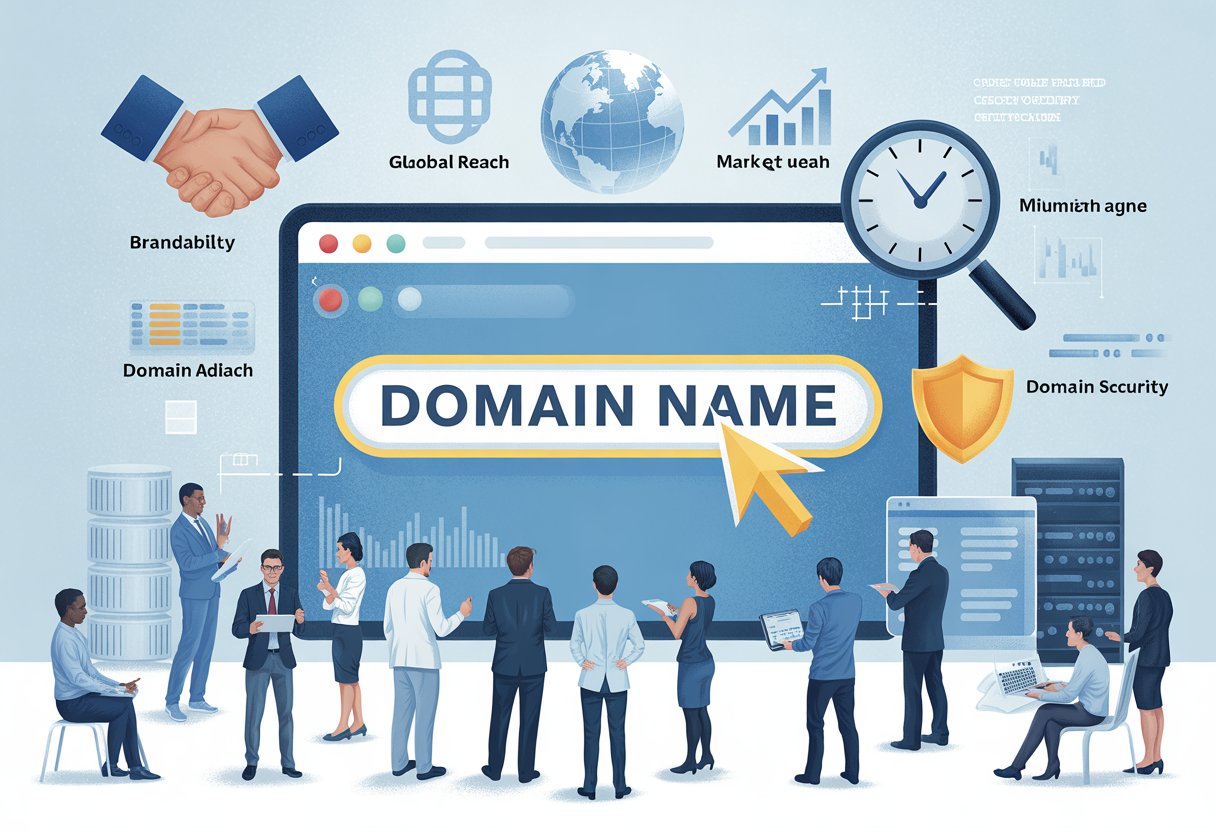
People treat domain names like assets, almost like owning land online. Short and catchy names with commercial potential fetch higher prices than clunky, complicated ones.
Domain name valuation requires careful consideration of multiple factors that stack up to determine what a name's actually worth.
The best domain investors spot value before the crowd does. The right domain can boost your brand, bump up your search rankings, and send more people to your site.
Learning to spot valuable domains gives you a leg up in today's noisy online world.
Key Takeaways
- Domain value comes from a mix of length, keywords, brandability, and demand.
- Short, memorable names with business appeal almost always beat longer, clunky ones.
- Age and good track records add credibility, which boosts value.
Core Elements That Determine Domain Name Worth
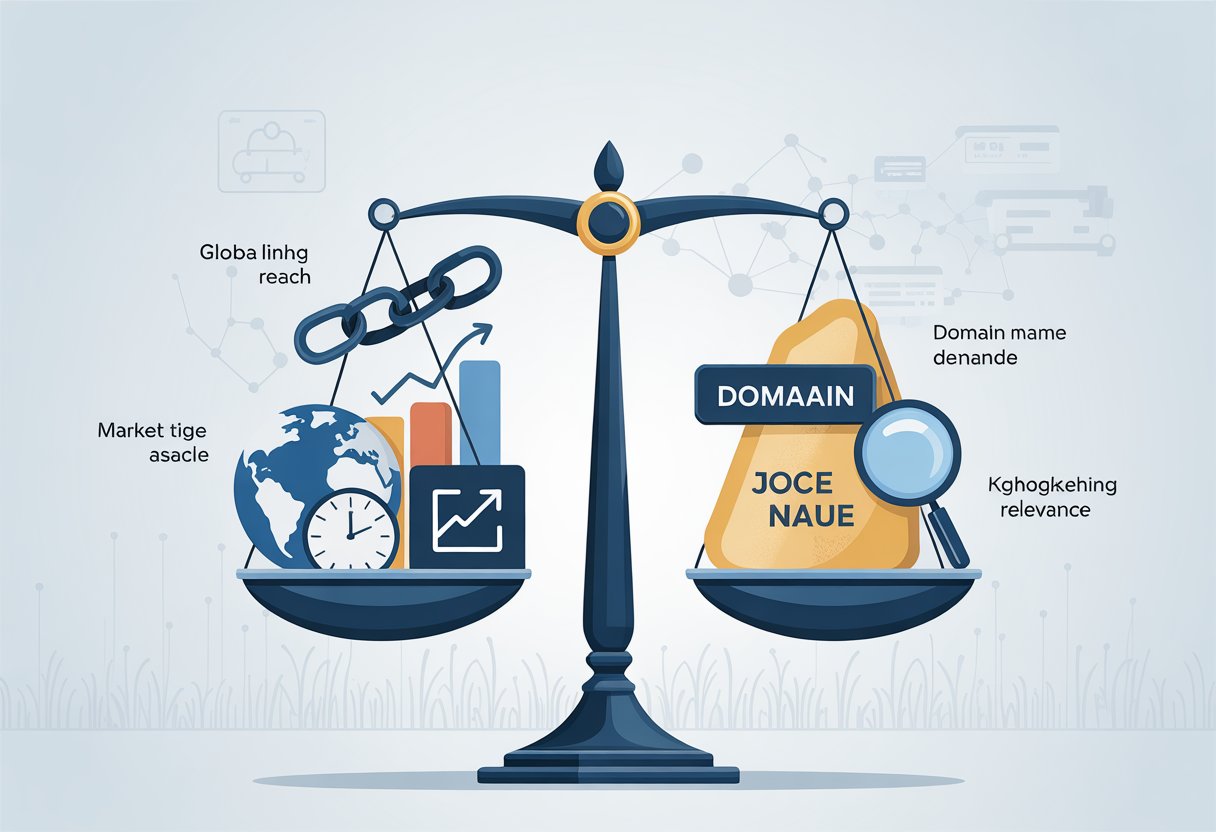
Three things really drive a domain's value: the extension, the length and simplicity, and the keywords in the name. Domain name value factors all come together to set the price.
Domain Extension: The Impact of TLDs
Your domain extension shapes how people see your site. .com domains are still the most trusted and fetch the highest prices.
Most folks type ".com" by default when they enter a web address. That instant recognition is a huge plus.
Other extensions like .net, .org, or .info usually sell for a fraction of what a .com would get. Country-specific endings can work locally, but they don't have the same global pull.
Premium TLD comparison:
- .com: Top value, universal trust
- .net: Second choice, feels techy
- .org: Non-profit vibe, less commercial value
- New TLDs (.tech, .store): Niche, smaller resale market
Domain extension impact on value plays into both what you can sell for now and what the name might be worth down the road.
Role of Domain Length and Simplicity
Short domains hit hard and stick in your memory. If you can snag a domain with just a few characters, you've found gold.
Single-word .coms—think "car.com" or "book.com"—can go for insane amounts. That's the dream category.
Shorter names are just easier to type and remember. People mess up less, too.
Domain length value scale:
- 1-3 characters: Super rare, super valuable
- 4-6 characters: Still really good
- 7-10 characters: Decent
- 11+ characters: Not great unless it's super brandable
If your domain has tricky spelling, hyphens, or numbers, buyers usually pass. Simple and clean wins every time.
Keyword Relevance and Search Volume
Keywords in your domain can make a huge difference, especially if they match what people are actually searching for. High search volume keywords mean built-in traffic.
Exact match domains for hot keywords go for more. "Insurance.com" is a classic example—millions of people search for insurance every month.
Keywords tied to lucrative industries—finance, real estate, health, legal—almost always score higher prices.
Check how many people search for your keywords monthly. There are tools for that, and it's worth a quick look.
If your domain matches what buyers need, especially in a specific industry, you're in good shape. Popular keywords boost SEO potential and can bring free traffic.
Brandable domains without obvious keywords can still be valuable if they feel like they could be a real business.
Brandability and Memorability
If a domain feels like it could be a brand and sticks in your head, it's worth more. Brandability covers memorability, uniqueness, relevance, and a bit of emotional spark.
Memorable names get more repeat visitors and word-of-mouth buzz.
Characteristics of a Brandable Domain
Simplicity is everything. Short, easy-to-spell names always beat the complicated ones.
Names like "Apple" or "Google" show how a simple word can become a powerhouse brand.
Uniqueness helps you stand out. If your name is one-of-a-kind, you avoid confusion and build a stronger identity.
Made-up words can work, too—sometimes that's even better for branding.
Flexibility lets your brand grow. Brandable domains adapt to new products or markets, which keeps them relevant.
Amazon started with books but now sells, well, everything.
Visual appeal matters, too. If your name looks good in a logo or ad, that's a bonus.
Clean, attractive domains just feel more professional.
SEO and Traffic Considerations
A domain's SEO value has a big effect on its price. If it ranks well or gets steady visitors, that's a strong selling point.
A domain's backlinks and keyword fit are big factors in how much organic traffic you'll get.
Backlink Profile and Organic Traffic
Your backlinks tell search engines if your site's trustworthy. High-quality links from solid sites boost your authority.
Domains with good backlink profiles often keep their rankings, even after you buy them.
Key backlink metrics:
- Domain Authority – Higher is better
- Referring domains – More unique links = more credibility
- Link quality – Trusted sites matter most
- Anchor text diversity – Natural variety keeps you safe
If a domain already gets steady organic traffic, that's proof it works. Tools like SEMrush let you check traffic and rankings.
The data can help you justify a higher price.
Historical Data and Domain Age
A domain's age and past sales give you real numbers to work with. Historical sales data shows what the market's willing to pay, and older domains usually carry more trust.
Historical Sales Data and Comparables
Look at what similar domains sold for to get a fair price. Historical sales data lets you compare past deals and set realistic expectations.
Key things to compare:
- Domain length and structure
- Keyword relevance and industry
- Extension (.com, .net, etc.)
- Timing and market conditions
Sites like NameBio track thousands of sales. Search for domains with similar keywords or in your niche to see where yours might land.
If fitness domains go for $5,000–$15,000, your fitness name is probably in that ballpark. Some patterns pop up, too—travel domains peak before vacation seasons, e-commerce spikes before big shopping months.
The economy matters. When business is booming, companies pay more for good domains. In rough times, prices can dip.
Market Demand and Industry Trends
The domain market shifts fast, reacting to changes in business sectors and what people want. Your domain's value really hinges on how it lines up with current trends and whether it fits a booming industry.
Market Trends Affecting Domain Values
Market demand plays a pivotal role in figuring out what your domain is worth. When certain industries take off, domains tied to them usually see a bump in value.
Tech trends, for example, can send domain prices soaring. Artificial intelligence, blockchain, and crypto domains all spiked when those fields hit the spotlight.
Popular trend categories include:
- Health and wellness
- Remote work solutions
- Sustainable energy
- Digital finance
- E-commerce platforms
Domains tied to high-demand sectors like e-commerce, remote work, or renewable energy can really jump in price. Timing matters—a lot—when you're buying or selling domains that ride emerging trends.
Economic booms push businesses to invest more in premium domains for branding. When the market's up, so is demand for top-notch names.
Domain Valuation and Appraisal Methods
There are a bunch of ways to figure out what your domain is worth, from free tools to full-blown professional appraisals. Each method gives you a different level of detail, depending on what you need.
Automated Valuation Tools and Free Appraisals
Free automated tools give you a quick ballpark figure, but don't take them as gospel. GoDaddy's appraisal tool shows recent sales and some popularity stats for free.
Estibot uses machine learning, looking at search volume, cost-per-click, and backlinks. It's a step up from the basic tools.
Premium automated services can do things like:
- Bulk appraisals for portfolios
- Historical trend analysis
- Integrate SEO metrics
- Offer API access
These work best for common domains. If your name is unique or super brandable, automated tools often miss the mark.
Limitations: They use old comparison data and can't really judge things like brandability or the next big trend.
Portfolio Management and Legal Considerations
If you want to succeed as a domain investor, you need to manage your portfolio carefully and keep legal risks in mind. Legal issues can pop up at any stage, from buying to selling.
Managing Domain Portfolios
You need a system for tracking your domains' performance and value. Keep an eye on renewal dates, traffic, and trends for each name.
Create a spreadsheet with your domains and important info—purchase price, renewal date, traffic, and potential revenue. That way, you can spot your top performers.
Ways to organize your portfolio:
- Group by industry or niche
- Sort by investment size
- Categorize by development stage
- Rank by earning potential
Review your portfolio regularly. Drop domains that cost more to renew than they're worth.
Building a resilient portfolio means tracking trademark issues and market changes. Set up alerts for trademark filings that might affect your domains.
Frequently Asked Questions
People buying or selling domains always want to know what drives prices. If you get how length, keywords, extensions, and traffic history work, you'll make better deals.
What are the key elements that determine the value of a domain name?
A few main factors come together to set your domain's value. Domain name value depends on multiple factors like length, keyword match, and brandability.
Short domains (under 10 characters) usually go for more. They're easier to remember and less likely to get mistyped.
Domains with keywords that match popular searches have better SEO value. High-volume keywords tend to boost worth more than niche terms.
The .com extension is still king because everyone recognizes it. .org and .net have value too, but usually not as much.
Brandable names that sound good and stick in your head often fetch higher prices. If it's catchy and unique, buyers will notice.
How does domain length and simplicity affect its market worth?
Shorter domains almost always sell for more. Domain length is a primary factor in valuation because short names are easier to remember and type.
One to three-word domains perform best. They also need less advertising to stick in people's minds.
Simple spelling—no hyphens or numbers—helps a lot. You want people to share your domain by word of mouth without confusion.
Domains with common English words usually do better than made-up terms. Still, a brandable invented name can score a high price if it sounds right.
In what ways do current trends and popular keywords impact domain valuation?
Trending topics and hot industries can send domain values through the roof overnight. Tech, health, and finance keywords usually see strong demand.
Search volume often lines up with pricing. Keywords with millions of monthly searches tend to make domains more valuable.
Some domains spike in value during certain seasons or events. Holiday or event-specific names can have short-term boosts.
Pairing geographic keywords with service terms often works well for local markets. Businesses love domains that target their region.
New tech trends bring fresh opportunities. If you grab the right domain before a trend peaks, you might see a big return.
What role does the top-level domain (TLD) extension play in the pricing of a domain name?
.com domains almost always top the charts for price. Domains with .com extensions are generally more valuable because they're universally recognized and trusted.
Country extensions like .co.uk or .ca hold value for local businesses. They're usually cheaper than .com but serve their markets well.
Newer extensions like .app or .tech attract specific industries. They don't usually sell for as much but can work for branding.
Generic TLDs like .info or .biz tend to have lower value. Most buyers stick to the classics.
Some industry-specific extensions, like .io, have gotten popular with tech companies—even if renewals cost more.
How does previous website traffic and history contribute to a domain's value?
Domains that already get organic traffic can sell for a lot more. That traffic is a ready-made asset for whoever buys the domain.
A clean history—no penalties or spam—gives buyers more confidence. Historical use and reputation impact domain value because search engines remember what happened before.
Established backlinks from reputable sites crank up SEO value. Building those links takes time, so they're a plus.
Domains once used by successful businesses come with extra credibility. That reputation can carry over to the new owner.
Age matters too. Older domains often have more authority with search engines.
Can the branding potential of a domain influence its overall market value?
Strong branding potential really bumps up what buyers are willing to pay for domains. Brandable domain names offer high marketing potential that often justifies those premium price tags.
If a name sticks in your head and you can spell it without thinking, it's going to cost more. Domains like that tend to cut marketing costs in the long run.
Domains that fit a bunch of industries? They attract way more buyers. That wider appeal usually means higher auction prices.
Names that sound professional—and skip the slang or local lingo—do better with global audiences. International businesses want domains that don't get lost in translation.
If a domain name hints at something positive or useful, it usually fetches a higher price. People will pay extra for a name that already says what they want.